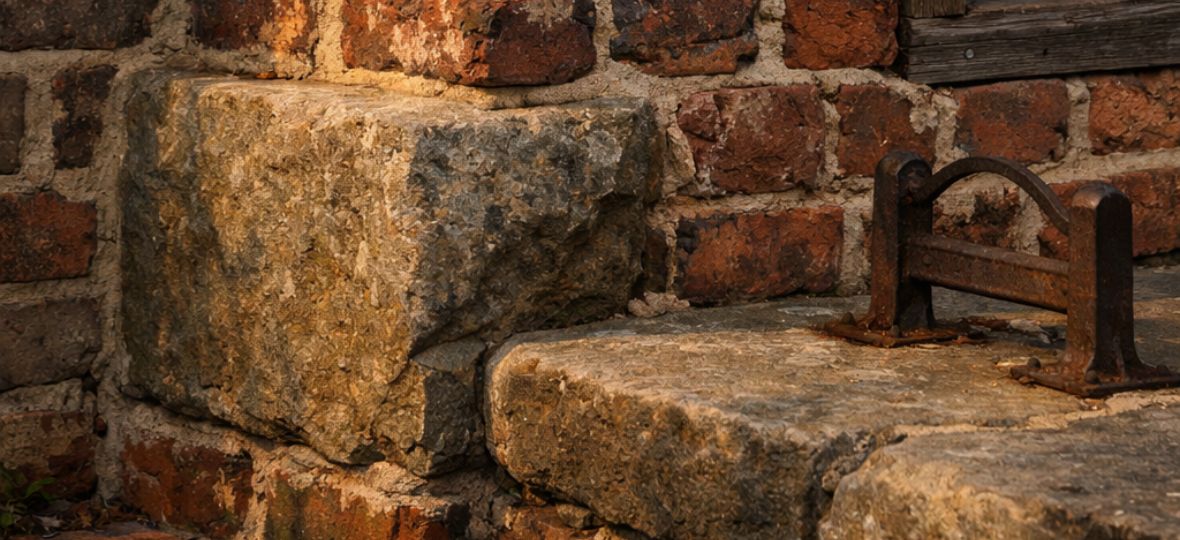
Old Salem and the West End Historic District hold some of the oldest continuously lived-in residential fabric in North Carolina. Eighteenth-century Moravian structures. Nineteenth-century brick vernacular. Victorian wood-frame homes. Early-twentieth-century craftsman bungalows. They share one trait. To different degrees, they're all rodent-vulnerable because of age. They all need rodent exclusion methods set to their construction era. Standard residential pest control is not.
Why Standard Exclusion Methods Can Damage Historic Homes
The most commonly used materials in modern residential rodent exclusion are Portland cement mortar for masonry repairs and expanding polyurethane foam for gap filling. Both are right for modern construction. Neither is right for pre-1940 historic fabric.
Portland cement on historic brick: Historic brick was fired to lower temperatures than modern brick and is correspondingly softer. Portland cement mortar is a lot harder than the original lime mortar used in pre-1920s masonry construction. When a harder mortar is applied to a joint in soft historic brick, differential expansion and contraction during temperature cycling forces the stress into the brick face rather than the joint, accelerating spalling and surface loss. A Portland cement repair on an Old Salem brick pier can cause more damage over five years than the rodent entry it was meant to prevent.
Expanding foam in wood-frame construction. Expanding polyurethane foam puts out pressure as it cures. In the generous cavities of modern construction, that's not a problem. In the tight gaps of settled 1890s balloon-frame construction, it is. A quarter-inch gap around a plumbing penetration has been squeezed by decades of movement. The foam can stress original woodwork. It can push against original lath. It can crack original plaster in the wall cavity right next to where it was put.
Heritage-Compatible Materials
The alternatives that are both rodent-good and preservation-right:
- Lime-compatible mortar: Pre-blended lime mortars formulated to match the composition and hardness of original 18th and 19th century masonry are the correct choice for Old Salem brick-pier and West End masonry work. They are breathable, flexible, and soft enough to allow differential expansion without stressing the adjacent brick face. They are available from specialty masonry suppliers and need slightly more skill to apply than Portland cement but make repair joints that will last decades without the spalling risk.
- Stainless-steel hardware cloth inserts: For wood-frame gaps, plumbing penetrations, floor-plate voids, window and door frame settling gaps, stainless-steel mesh inserts with a thin layer of paintable siliconized caulk as a perimeter seal are the preferred method. The mesh is gnaw-resistant (unlike foam), the caulk is paintable to match current trim, and the setup does not need the cavity pressure that foam creates.
- Powder-coated steel vent screens: Original crawl-space and attic vents in historic construction can often be retrofitted with powder-coated 1/4-inch steel mesh inserts rather than replaced. Where replacement is necessary, historically styled pre-screened cast-iron or steel vents are available that keep the visual character of the original.
- Bronze and painted-steel thresholds: Door sweep replacement on historic doors uses period-right materials, bronze bristle sweeps or painted steel solid-neoprene products that match the hardware era of the door rather than the generic aluminum sweep standard in modern construction.
Old Salem Preservation Guidelines
Properties in the Old Salem Historic District are subject to review for certain exterior changes. The review goes through Old Salem Inc. and Forsyth County historic-preservation authorities. The preservation framework splits work into two types. Work that is visible from public right-of-way and work that is not. Practical implications for rodent exclusion:
- Interior work, trap setup, interior penetration sealing inside cabinet bases and utility chases, usually does not need review.
- Crawl-space and foundation work on non-street-facing elevations is usually not subject to review unless it includes visible alteration to historic fabric.
- Repointing mortar joints on street-facing brick elevations may need review and approval before work begins.
- Gable-vent replacement on street-facing elevations may need review, especially on properties within the formal district boundary.
The practical way is simple. We talk through the property's designation status and the proposed exclusion scope before any exterior work goes on the table. We check every Old Salem-adjacent property's overlay status before issuing a quote that includes exterior masonry or vent work.
Records for Historic Properties
One practical gap between historic home exclusion and standard residential exclusion is the value of records. For a property that may face future preservation review, architectural review, or sale to a buyer, the records matter. A written exclusion record finds every sealed location and the material used. It has long-term value beyond the quick rodent problem it solved. We give this written exclusion map on every historic home job. Not as an extra. As the responsible way to record work on a building that has historical value.
Questions About Your Winston-Salem Property?
Free inspection. Written quote. Open 24/7 across Forsyth County.