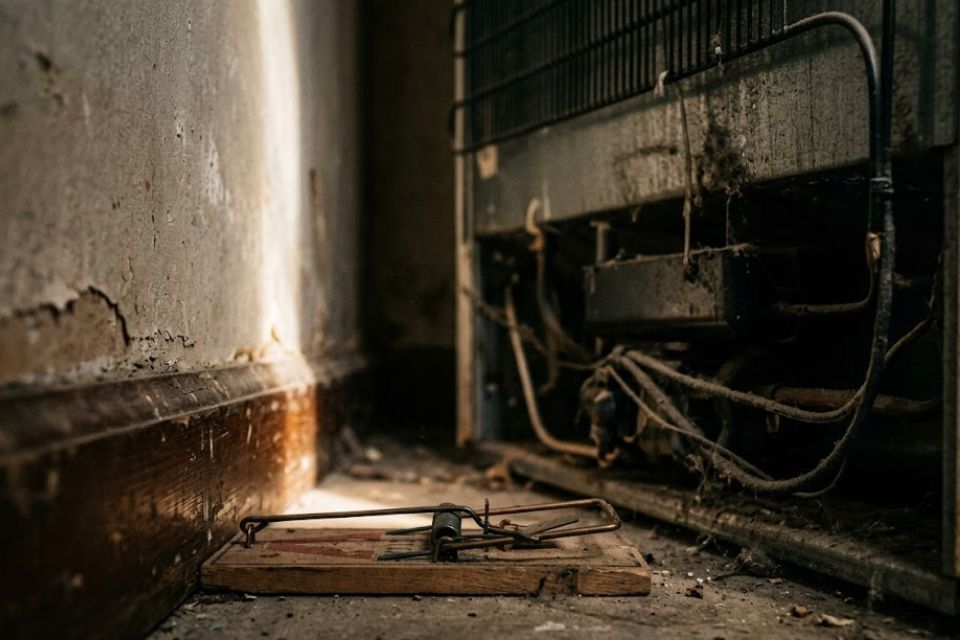
Mouse infestation treatment is a multi-stage pro program for set up house mouse populations, the step beyond the one-or-two mice a homeowner first notices. By the time droppings show up in multiple rooms and wall scratching is audible from two or more locations, a standard residential trap program needs a treatment-scale response, not a single snap trap under the sink.

Active mouse populations follow a runway pattern. Mice memorize routes and follow them along walls, behind appliances, and through utility chases. 6 to 12 active runways means a set-up population — usually 8 to 20 mice. Under 5 means recent activity from 1 to 3 transient mice. Treatment scope and timeline change based on which case it is.
A West Salem (27101) homeowner reported nightly scratching for 3 weeks. First inspection mapped 9 active runways across kitchen, laundry, and basement — indicating an set up population estimated at 12–15 mice. We ran a 3-week knockdown program with 18-trap array placement, sealed 11 entry points, and confirmed zero activity at the 4-week follow-up. Scope: $1,120.
Not every mouse sighting is an infestation, but in Winston-Salem's pre-1970s housing stock, isolated incidents are less common than most homeowners assume. Use this severity guide to understand where you likely stand.
Droppings confined to one area (under kitchen sink or near a single food source). No audible scratching. No rub marks on wall-base baseboards. Likely a recent entry through a single gap. Standard trap placement plus entry-point sealing resolves this in 1–2 weeks.
Droppings in 3+ locations. Rub marks along baseboards in at least one room. Scratching audible from one wall void. Multiple runway signs in kitchen, laundry, and pantry. Needs 4–6 active trap stations across multiple runways. Knockdown in 2–3 weeks.
Droppings across the home. Audible scratching from multiple wall sections, ceiling voids, or attic. Gnaw damage on more than one structural piece. Daytime sightings. Heavy treatment program with 8–12 trap stations, possible bait station supplementation, and full exclusion. Knockdown 3–5 weeks.
In Winston-Salem's dense pre-1970s housing belt, Ardmore, Holly Avenue, Boston Thurmond, Washington Park, West End, modest and heavy infestations are the norm, not the exception, by the time a homeowner calls. A breeding pair can reach 30+ individuals in 90 days under favorable conditions. Timing matters.
We don't just inspect, we map every active runway. Rub marks, dropping clusters, gnaw sites, and nest locations are recorded by room and by structural piece. This map drives trap placement: mice are neophobic and will avoid traps placed in unfamiliar locations.
4–12 snap-trap stations placed in wall-base runway positions inside cabinet bases, behind appliances, and in attic insulation edges, not on open floor surfaces where mice won't engage them. Station count scales to severity review from the inspection.
Return visit to check catch rates, reset trap arrays, and confirm which runways are most active. High-catch runways get more stations. Zero-catch positions are relocated. This is the check step most DIY programs skip.
Sub-1/4-inch gap sealing at all confirmed and probable entry points, executed simultaneously with or right away after trap knockdown. Stainless-steel mesh, expanding foam with deterrent additive, door-sweep replacement. The treatment is short-term without this step.
Final visit to confirm two weeks of zero-catch, check no new droppings, and record exclusion integrity. Written close-out gave. If activity keeps, we keep, no charge for more follow-up within the treatment window.
| Treatment Level | Typical Range | What's Included |
|---|---|---|
| Isolated (1–5 mice) | $250–$400 | Trap program, one follow-up, entry sealing at primary gap |
| Modest (6–20 mice) | $400–$700 | Multi-station trap array, two follow-up visits, partial exclusion |
| Heavy (20+ mice) | $650–$1,200 | Full trap array + possible bait stations, full exclusion, check visit |
| Full Program (treat + seal, any severity) | $750–$1,800 | Treatment + whole-home exclusion + all follow-ups + written prevention plan |
| Add: Droppings cleanup | $200–$600 | PPE-grade cleaning of heavily contaminated attic, crawl space, or kitchen areas |
Older Ardmore and West End properties with tricky crawl spaces and high entry-point counts trend toward the upper end of ranges. Free inspection. Written quote. No contracts.
Same-day available for confirmed infestations. Open 24/7. Written quote before any work.
Most homeowner insurance excludes rodent infestation as a covered peril. Secondary damage — chewed electrical wiring causing fire risk, contaminated insulation — may fall under standard property clauses with proper records.
Call (844) 635-0403 for a free infestation inspection.
Beyond standard mouse inspection: we look for evidence of breeding (different-size droppings showing multiple generations), nest locations (heavy droppings concentration, urine staining, insulation tunneling), and primary travel runways. The inspection finds whether the situation is one large source population or multiple smaller populations, different treatment ways.
Standard mouse control uses 8-12 traps. Infestation treatment uses 18-30. Trap positioning concentrates at confirmed runways, near nest locations, and at choke points where mice transit between rooms. Bait selection rotates across the trap layout to prevent bait aversion. We monitor every 2-3 days during the high-activity phase.
Daily catch rates of 6-12 mice are typical in the first week of an older infestation. Rates drop to 1-3 by end of week 2 and way zero by week 3 in successful treatments. We track the curve. Flat or rising catch rates after week 1 signal more breeding sources needing expanded scope.
Once knockdown reaches near-finish, sealing of every found entry point. Mouse infestation properties usually have 25-40 entry points (vs 12-20 for standard mouse control situations) because the set up population has used more openings over time. Exclusion runs 2-4 days of work based on property trouble.
Heavy droppings cleanup, nest material removal, and HEPA-vacuumed disinfection of affected areas. Followed by 7-14 day check phase with reduced trap density. Zero new activity confirms the program is complete. New activity triggers spot-treatment at the affected location.
5-7 weeks for complete resolution including check. Properties with steady external pressure (rural-residential, field-edge) sometimes need steady preventive monitoring beyond the first program.
A single mouse leaves scattered droppings near one food source. An infestation shows droppings in multiple locations across the home, rub marks (dark grease streaks) along wall-base runways. Gnaw damage on more than one structural piece, and scratching audible from multiple wall voids. In Winston-Salem's pre-1970s housing, an infestation is usually 15–40 individuals by the time it becomes obvious.
A single trap placed under a sink catches one or two mice from a dominant runway. A mature infestation has 6–12 active runways across the property. Treatment needs 4–8 traps per active runway, placed in the protected wall-base and cabinet positions mice really use, not just the visible exposure points where homeowners usually put traps.
Resolution is confirmed when traps go two consecutive weeks with no catches, fresh droppings are no longer showing up, and the follow-up inspection finds no new gnaw activity. We include a check visit on every infestation job to confirm these criteria before closing the job.
Yes, though it's slower than rat damage. Mice gnaw wiring insulation, a fire risk, and soft PVC plumbing fittings. In older Winston-Salem homes with knob-and-tube remnants or aluminum wiring, the risk is compounded. Nesting material accumulated over one season in wall cavities or attic insulation creates moisture retention that contributes to mold growth.
The tools are similar but the program is scaled differently. Standard mice control addresses a light-to-modest situation with a basic trap program. Mouse infestation treatment is the multi-station, multi-visit protocol for set up populations where a standard program would be under-resourced from the start. The inspection decides which scope applies to your property.
Standard mouse control addresses a small or new population, a few mice, one or two entry points. Mouse infestation treatment is for set up populations. Droppings in multiple rooms. Audible activity in two or more wall cavities. Evidence of breeding (different-size droppings. Nest material). The treatment program is multi-stage and runs longer than basic control.
Multi-stage means inspection → species confirmation → high-density trap setup → 7-14 day knockdown phase → exclusion of entry points → 7-day check phase → final inspection. Each stage handles a specific population dynamic. Skipping stages, especially the exclusion, leaves the property vulnerable to re-buildup.
No. The treatment uses snap traps in protected positions, exterior tamper-resistant bait stations, and physical exclusion materials. No fumigation, no airborne chemicals, no needed vacancy. We walk through placement specifics before work starts so the household knows exactly where active traps are.
Knockdown in 10-14 days for most properties. Full resolution including exclusion check: 3-4 weeks. Heavy infestations or properties with steady external pressure (rural-edge, agricultural adjacency) can run 5-6 weeks. Written timeline gave in the quote.