Free Inspection · Same-Day Available

Rat Nest Removal in Winston-Salem, NC

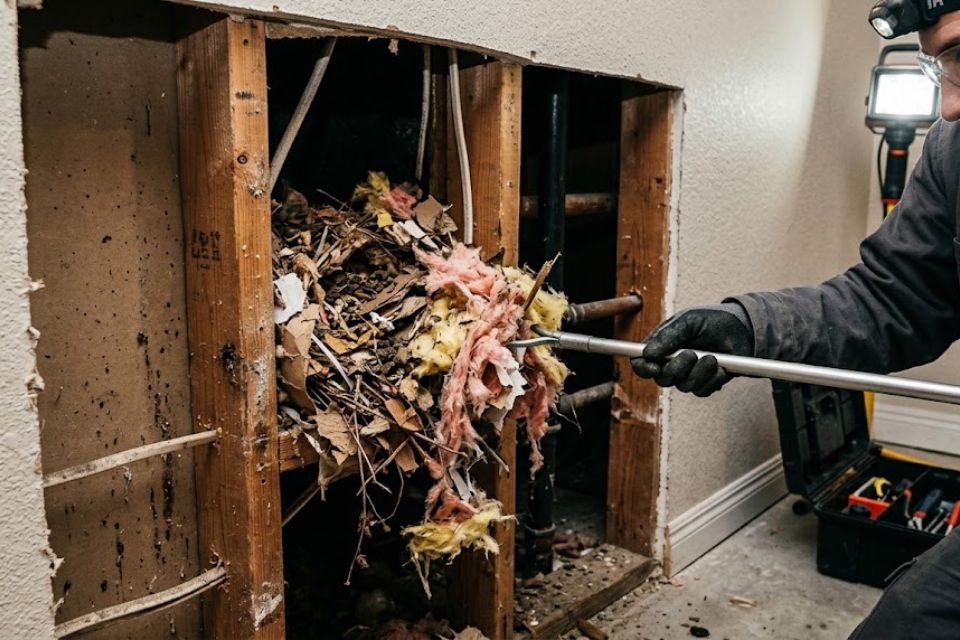
Rat nest removal is the location, extraction, and disposal of active or abandoned rodent nesting sites, the dense accumulations of insulation, shredded paper, fabric, and organic material that rats and mice build in attic corners, crawl-space beam bays, and wall cavities. Nesting material is saturated with urine and harbors the same pathogens as droppings. It cannot simply be left in place after treatment. Abandoned nests also retain pheromone scent markers that attract new rodents to the same location.
📞 Call (844) 635-0403All 33 Services
Rat nest removal from an attic space in Winston-Salem NC
NC-licensed structural pest control. Written guarantee on exclusion work. Same-day dispatch before mid-afternoon. Recorded records for Forsyth County Health Dept.
๐Ÿ”ง Tech Insight

Rat nests are usually hidden in wall cavities, attic insulation, or utility chase spaces. A typical Norway rat nest holds 6 to 12 rats and 200 to 400 grams of nesting material. Shredded insulation. Fabric. Paper. Nest removal needs PPE (N95 or better, disposable coveralls), HEPA-filter vacuum collection, EPA-registered surface disinfection, and sealed-bag biohazard disposal.

๐Ÿ“‹ Real Case

A Hanes Mill (27105) homeowner found a large nest in attic insulation after a rat carcass turned up in the garage. We extracted about 380 grams of contaminated nesting material across 2 days, disinfected the affected framing with EPA-registered solution, and paired insulation replacement (separate contractor). Scope (nest removal + sanitation only): $740.

Why Nests Must Be Removed After Treatment

Why Nests Must Be Removed After Treatment

Abandoned nests keep to attract new rodents through scent marking. Rats leave urine trails and gland secretions on nesting material. These markers remain active for months and work as a homing signal for any rat that explores the area. Leaving an intact abandoned nest after exclusion is complete a lot increases the probability of re-colonization through any new entry point that builds.

What Rat Nest Removal Includes

Nest location via attic or crawl-space walk, or wall-cavity check for confirmed interior nesting. Extraction of all nesting material including the contaminated insulation right away nearby the nest. Bagging and disposal. HEPA-vacuum cleanup of the extraction area. EPA-registered disinfectant spray of all surfaces the nest contacted. Written report recording location, size, and any structural findings found at the nest site.

Wall Cavity Nests

Nests in wall cavities are the most hard extraction case, the nest has to be located by odor triangulation and wall-surface inspection before any access is cut. We open the minimum necessary, extract the material, disinfect the cavity, and patch the access. We do not open walls speculatively or cut multiple access points before the location is confirmed.

Free Inspection in Winston-Salem & Forsyth County

Written quote. Open 24/7. Same-day available for active situations.

📞 Call (844) 635-0403
Work & Pricing

Where Rat Nests Hide and What Removal Costs

Rat nests in Winston-Salem properties hide in five primary locations, and the removal scope varies a lot based on which location holds the nest and how heavily it's used.

Attic insulation nests

Roof rats build nests in blown cellulose or fiberglass batt insulation, tunneling channels through the material to create internal pathways. Removal includes finding the tunneled sections (visible as compressed channels and dark staining), extracting the affected insulation with HEPA vacuum and hand-removal, and disposing in biohazard-grade containers. Heavy nest concentration may warrant full insulation replacement arranged with a separate contractor.

Wall-cavity nests

Norway rats build nests inside wall voids accessed through plumbing penetrations or foundation gaps. These nests are the hardest to remove because wall-cavity access needs either small inspection-port cuts in drywall (usually 4-6 inches) or removal of cabinet bases for under-sink access. Removal includes carcass and nest material extraction, cavity disinfection, and drywall patching planning.

Crawl-space nests

Both Norway rats and house mice build nests in crawl-space corners, behind insulation batts, and in stored materials. Crawl-space nests are usually accessible, straightforward removal with PPE-grade methods. The work happens from within the crawl space. No structural disruption to living space.

Outbuilding nests

Detached garages, sheds, and storage structures often harbor nests in stored materials, wall voids, and insulation. Removal is straightforward but scope varies with the volume of stored material needing inspection.

Removal pricing

Single-location accessible nest removal: $220-$420. Multi-location nest removal with crawl-space and attic scope: $480-$950. Wall-cavity nest removal with drywall access work: $580-$1,200 (drywall patching usually by separate contractor). Heavy attic infestation with wide insulation tunneling: $850-$1,800 plus separate insulation replacement scope.

Common Questions

Factors That Change Your Specific Quote

About insurance: Nest removal alone isn't a covered-peril line. Secondary damage from sustained activity โ€” insulation contamination needing replacement, electrical damage โ€” may qualify under standard property clauses.

Want your real number? Call (844) 635-0403 for a same-day nest dispatch.

FAQs

How do you find a rat nest inside a wall?

Wall-cavity nest location uses odor triangulation (the sweet-musty smell of a nest concentrates near the cavity), thermal imaging where the gear adds value, and careful tap-testing of the wall surface to find the void location. We confirm the position before any access is cut and open only what is necessary to extract the nest.

Is it necessary to remove nesting material if the rats are already gone?

Yes. Abandoned nesting material retains scent markers that attract new rodents, and carries the same pathogen load as fresh droppings. Leaving old nesting material in place is a re-infestation risk reason and a persistent contamination source.

What does rat nest removal cost in Winston-Salem?

Attic nest removal for one to three nests in accessible insulation runs $200โ€“$500, not including insulation replacement if the nearby material is too contaminated to leave in place. Crawl-space nest removal runs $200โ€“$450. Wall-cavity extraction including access opening, patch, and disinfection runs $300โ€“$600 per access point. Free inspection. Written quote before work begins.

Why is nest removal a separate service from rat removal?

Killing the rats doesn't remove the nests. Active nests contain droppings, urine, nest material (insulation tunneled into nesting form), and sometimes dead offspring. Removing these reduces contamination, eliminates a source of secondary odor, and addresses the structural damage rats cause to insulation and framing materials they use for nesting.

Where are rat nests usually located?

Three common locations. Inside walls (where rats have access to wall cavities via plumbing penetrations). In attic insulation (heavily-tunneled sections of blown cellulose). And in detached structures like garages and sheds (in stored items. Wall voids. Insulation). Inspection finds nest locations during the active trapping phase.

How is nest material safely removed?

PPE-grade removal. N95-plus respirators. Disposable coveralls. HEPA-filter vacuum collection. Material seals in disposal bags on-site. Then it goes in covered containers and is disposed of per protocol. We disinfect the cavity afterward with EPA-registered products. The removal work is methodical, not fast.

Does nest removal happen before or after exclusion?

Usually after active trapping reaches knockdown and during the same window as exclusion work. Order: knock down population โ†’ remove nests โ†’ seal entry points โ†’ final cleanup. Removing nests while rats are still actively using them creates work that gets right away redone.

Will nest removal damage my insulation?

Localized, the nest material itself was already insulation damaged by the rats. Removal extracts the damaged part. Adjacent intact insulation stays in place. Heavy nest concentration warranting broader insulation replacement is a separate scope addressed in the insulation-replacement service.

Can I remove a rat nest myself?

Small surface-level nests in easy-to-reach spots โ€” like a garage corner or the edge of an attic โ€” can be handled with proper PPE. Wall-cavity nests, large attic insulation tunneling, and any heavily-soiled material need pro removal. The exposure risk and the contamination category both exceed safe DIY scope.

Related Services

Often Combined

๐Ÿ“ž Call (844) 635-0403, Open Now