Rodent bait station setup is the placement and upkeep of tamper-resistant exterior bait stations. These are the perimeter piece of rat programs. They're for properties where Norway rat pressure from outside sources is constant. The pressure can come from nearby sewer lines, landscaping, or neighboring sites. Interior trapping alone can't handle that. Bait stations are placed on the exterior perimeter, not inside occupied residential spaces, they are an outdoor tool calibrated to Norway rat habits and NC structural pest control regulations.
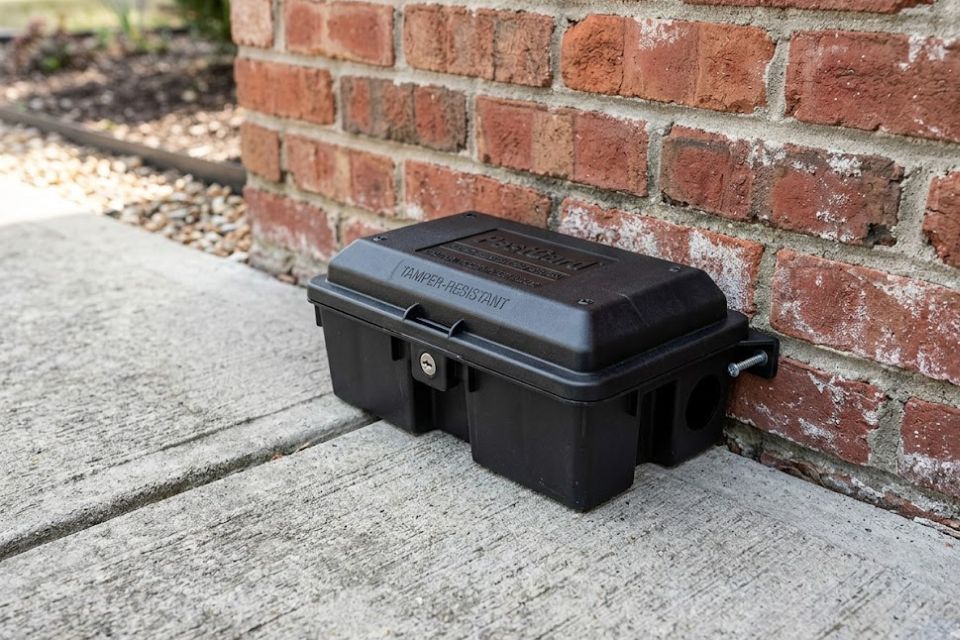
Tamper-resistant bait stations go at runway evidence spots. Not on a uniform grid. Norway rat pressure shows up as worn travel paths along foundation joints, burrow entrances, and corner shelter spots. Good placement needs inspection-first mapping. Random placement at even intervals cuts how well it works by 40 to 60% compared to evidence-mapped placement.
A West Salem (27101) commercial property received 8 tamper-resistant exterior bait stations placed at mapped runway locations along the loading dock and dumpster perimeter. After 30 days of first-generation bait, Norway rat evidence dropped to zero. The property switched to monthly maintenance mode. Scope: $640 setup + $140/month ongoing.
A tamper-resistant bait station is a locked, weather-resistant plastic housing sized to allow rat entry but too small for children, pets, and most non-target wildlife. The NC structural pest control board needs tamper-resistant housing for any exterior rodenticide setup. Stations are secured to the ground or a fixed surface, labeled per rule-side needs, and stocked with first- or second-generation anticoagulant rodenticide bait in block or pellet form. Each station is serviced on a schedule tied to bait consumption, high-consumption stations show active pressure and receive more frequent checks.
Exterior bait stations belong where Norway rat pressure comes from outside the structure. Sewer-adjacent properties in Old Salem and West Salem. Commercial properties with loading-dock access. Warehouse perimeters along industrial corridors. The stations are the lead tool for exterior perimeter programs and a supplement, not a replacement, for interior snap-trap programs on active infestations.
Stations go at burrow entrances. Along foundation walls within 6 inches of the building. Near loading dock corners. At landscaping transitions. At utility penetrations. These are the places Norway rats travel. Placing them at random spots without looking at runway evidence doesn't work. We map and record every station placement.
Written quote. Open 24/7. Same-day available for active situations.
Bait station setup in Winston-Salem follows protocols designed for both efficacy and safety. Five pieces define proper setup and regular upkeep.
Exterior tamper-resistant stations placed every 25-40 feet along the property perimeter, with closer spacing near found rodent travel corridors (fence lines, plants edges, exterior storage areas). Each station positioned where rodents will run into it during normal travel patterns rather than in random locations. Station spacing scales with property size: a 1,400 sq ft Ardmore home usually takes 4-6 exterior stations. A 3,500 sq ft Buena Vista property takes 8-12.
Each station physically anchored to the foundation or ground stake to prevent dragging by children, pets, or wildlife. Stations rated for child- and pet-resistant access, need a specific tool to open. Bait blocks secured inside on internal rod or wire system that prevents bait removal by anything smaller than a rat.
First-generation rodenticides for standard situations. Slower-acting. Lower secondary-toxicity risk. Second-generation when the case is severe and proper protections are in place. Bait blocks rotate across active ingredients. That prevents bait aversion in long-term programs. We log bait choice per station for tracking.
Monthly inspection during the active treatment phase. We check station condition, top up the bait, and review activity. Quarterly during the upkeep phase for stable properties. Annual for long-term preventive programs. Every visit logs station status. Bait remaining. Activity evidence. Station condition. And any environmental changes affecting placement.
We log each station. Date installed. Location set. Bait type. Upkeep dates. Bait consumption tracking. The format works for commercial rule-side needs. FDA. State agricultural department. Local health departments.
Pricing. First setup per station: $35-$65 based on placement trouble. Monthly upkeep: $8-$18 per station based on visit cadence and records scope. Commercial volume pricing available. Free property inspection decides optimal station count before quote.
About insurance: Bait station service is operating expense, not insurance. For commercial accounts, recorded service supports business-interruption claims if an outbreak triggers rule-side action.
Want your real number? Call (844) 635-0403 for a free perimeter assessment.
Tamper-resistant bait stations are rated to resist access by children and most domestic pets per NC structural pest control board needs. The station housing needs deliberate manipulation to open. We also discuss placement specifics on every job to keep stations out of high-pet-traffic areas where more caution is warranted.
No. We do not place rodenticide bait stations inside occupied residential spaces. The risk of a rodent dying in a wall void after ingesting interior bait, creating a decomposition-odor problem that is costly to resolve, is not worth the marginal gain over snap-trap programs.
Service frequency is driven by bait consumption. High-pressure exterior locations adjacent to sewer system usually need monthly service. Lower-pressure perimeter programs can run quarterly. We set the first frequency from the site survey and adjust after the first two service cycles.
First setup for a residential perimeter program usually runs $200โ$500 for 4โ8 stations including the first bait loading. Commercial perimeter programs with more stations run $400โ$1,200 at setup. Steady service visits run $80โ$200 per visit based on station count and travel. Free site review. Written quote before setup.
Bait stations contain rodenticide that rats and mice consume. They're built tamper-resistant so pets and children can't access the contents. Stations are placed exterior, usually along the foundation, and give perimeter-level population control. Traps are usually interior, place mechanically, and make quick kills.
Yes when properly installed. Tamper-resistant stations rated for child- and pet-resistant use need a specific tool to open, they're not accessible to a curious dog or child. We anchor stations to the foundation or ground stake to prevent dragging. The rodenticide bait is contained inside. Environmental exposure is minimal.
Monthly monitoring during active treatment, then quarterly during upkeep phase, annually for properties on long-term preventive programs. Service includes bait replenishment, station condition check, and activity review. We log each service visit and give written records.
Consumer-grade rodenticides exist. But they work less well. Their tamper-resistance is looser than commercial-grade products. The cost gap between DIY and pro matters more for small properties. For large or commercial properties, the records and service consistency justify pro work.
Needed for most food-service health-code rule-following. Forsyth County health inspectors record the presence of pro pest-control bait stations during routine restaurant inspections. Absence is sometimes flagged as a rule-following gap. Our commercial bait station service includes the records health inspectors look for.