Rodent Damage Repair in Winston-Salem, NC
Rodent damage repair is the structural rebuild work that follows cleanup and exclusion on properties where rats or mice have caused real damage to drywall, wood framing, vapor barriers, vent housings, soffit panels, and similar building components. This is different from droppings cleanup and different from insulation replacement. Damage repair rebuilds the parts of the building that rodent activity has actually broken — gnawed wood members, holes in drywall created during emergency access, deteriorated vapor barriers, damaged vent screening, and the cosmetic restoration that follows. We paired damage repair with our cleanup and exclusion work or pick up properties after another provider has completed the active rodent removal.
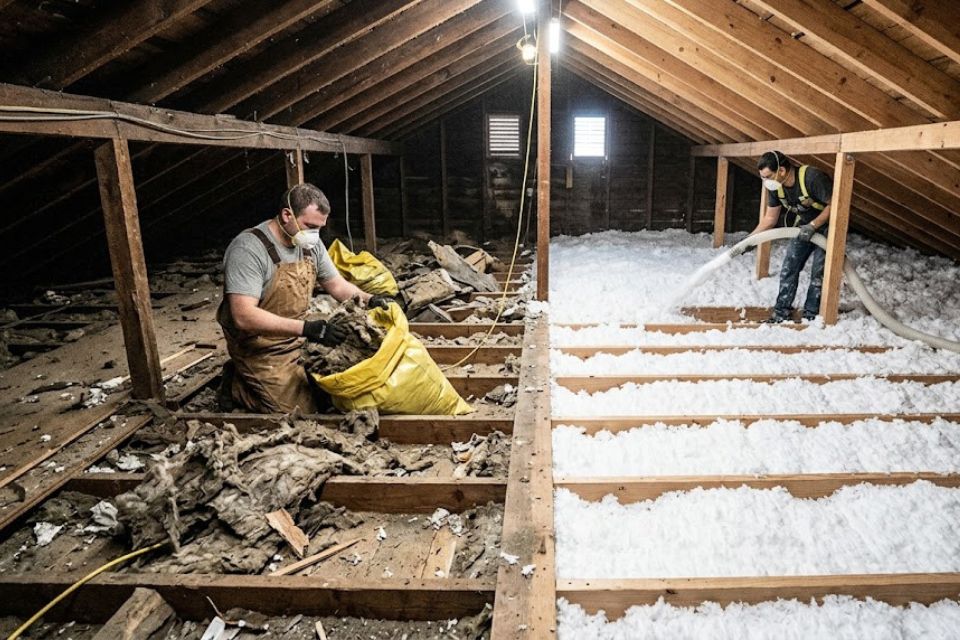
Damage repair sequence matters. Structural work first (wood members, vapor barriers, vent housings). Cosmetic finish work second (drywall patches, paint, sealants). Reversing the sequence — painting a wall before fixing the underlying gnaw damage in the framing behind it — means tearing out and redoing the cosmetic work. Properly sequenced repairs save 15 to 30 percent on total cost over the long run.
A 1928 West End (27101) homeowner had finished a rodent removal program with another provider and called us for the damage repair scope. We recorded 14 drywall patches needed, vapor barrier replacement across 700 square feet of crawl space, and 4 vent housings requiring rebuild. Coordinated repair work over 9 days. Scope: $2,180 total, with insurance covering $1,400 under secondary-damage records.
What Counts as Rodent Damage Repair
Rodent activity damages buildings in predictable patterns. Understanding which damage falls into the repair scope (vs cleanup or exclusion) helps you scope the work and budget correctly.
The five damage categories we scope
Rodent damage breaks into categories that need different repair approaches. Drywall and finish work uses one set of materials and finishers. Structural wood repair coordinates with a licensed contractor. Vapor barrier and vent work runs on its own schedule. Knowing which category dominates the scope helps you budget realistically.
Drywall damage
Gnaw holes around plumbing penetrations, baseboards, and in wall cavities. Also access cuts that previous treatment work created (often 6–12 inch openings made to extract carcasses or access nest sites). Drywall patching and repainting fall under repair.
Wood framing damage
Sill plates, joists, and rafters with gnaw damage from sustained activity. Most cosmetic gnaw damage doesn't compromise structural integrity, but heavy damage in load-bearing members may warrant sistering or partial replacement. We assess and document. Structural repairs paired with a licensed contractor when warranted.
Vapor barrier replacement
Crawl-space and basement vapor barriers torn or contaminated during rodent activity. The barrier itself is part of moisture management. Replacement is repair work.
Vent housing rebuild
Soffit vents, gable vents, ridge vents, and crawl-space vents damaged during rodent access. Includes housing repair, screen replacement, and integration with new exclusion work.
Subfloor damage in extreme cases
Heavy long-term rat activity occasionally damages subfloor panels in storage areas. Replacement is rare but does occur.
What does NOT fall under damage repair
insulation replacement (separate scope), droppings cleanup (separate scope), and electrical wiring damage (specialized scope, separate service).
How Damage Repair Fits Into Total Rodent Remediation
A full rodent remediation on a typical Winston-Salem property has four stages. Damage repair is the fourth.
Stage 4 is where repair fits in
Customers often call us for damage repair without realizing they may still have an active population. Repair work on a property with continuing rodent access just creates new damage within weeks. Our intake walks customers through stage verification first: confirming the rodent population is no longer active, exclusion sealing is documented, and contamination cleanup is complete. Once those three stages are confirmed, repair work makes sense.
Stage 1 — Active rodent removal
Trapping, baiting, and population knockdown. Usually 2–4 weeks depending on severity.
Stage 2 — Exclusion sealing
Physical sealing of entry points after population knockdown. Prevents re-entry.
Stage 3 — Cleanup and sanitation
Droppings removal, surface disinfection, contaminated insulation removal. Some properties also need insulation replacement here.
Stage 4 — Damage repair
Drywall patching, wood repair, vent housing rebuild, vapor barrier replacement. The final cosmetic and structural work that returns the property to pre-infestation condition.
Many properties don't need Stage 4 at all. If activity was caught early, damage may be limited to droppings (Stage 3 only). Properties with sustained activity over months or years usually need full Stage 4 work. We assess at inspection and quote each stage separately so customers know what's needed and what can wait.
For customers who've already completed Stages 1–3 with another provider, we can pick up Stage 4 work directly. Bring the prior provider's records and we'll paired from there.
Rodent Damage Repair Pricing in Winston-Salem
| Repair Scope | Typical Range | Notes |
|---|---|---|
| Inspection &. Written scope | $0 | Free. Itemized written quote. |
| Drywall patching (small, 6–12 in) | $80–$220/patch | Includes priming and color-matched paint for visible areas. |
| Drywall patching (larger sections) | $220–$650/section | Quoted per location based on size and finish requirements. |
| Vapor barrier replacement (crawl) | $450–$1,400 | Includes removal of contaminated barrier and full replacement. |
| Soffit/gable vent rebuild (per vent) | $140–$420 | Housing repair, screen replacement, weather sealing. |
| Wood member repair (cosmetic gnaw) | $80–$280/area | Filler, color-match, sealant. |
| Structural wood replacement (sister or full) | By contractor quote | Coordinated with licensed structural contractor. |
Pricing varies by access difficulty, finish requirements, and total scope. Whole-house damage repair usually runs $600–$2,800 for properties with moderate damage; $2,800–$6,500+ for properties with sustained long-term activity damage. Written quotes after the free assessment.
Factors That Change Your Specific Quote
- Damage scope (single drywall patch vs whole-house repair)
- Finish requirements (utility area filler vs visible-surface color-matched paint)
- Vapor barrier replacement square footage (crawl-space-specific)
- Vent housing rebuild count (per-unit pricing)
- Structural wood repair extent (cosmetic vs sistering vs replacement)
About insurance: Damage repair often falls under homeowner insurance secondary-damage clauses when the recorded chain of causation links to a covered peril. We provide the photographic evidence, scope of damage, and itemized repair quote in the format insurers usually request. Insurance approval is between you and your carrier. We supply the records.
Want your real number? Call (844) 635-0403 for a free damage assessment.
How Rodent Damage Repair Works in Winston-Salem
Damage Assessment
Full property walk to inventory rodent damage by category. Drywall, wood members, vapor barriers, vents, subfloor. Photo records. Written scope with per-item quote.
Work Check
Verify rodent population is no longer active (active treatment complete) and exclusion sealing is in place. Repair work on a property with continuing rodent access just creates new damage.
Structural Work First
Any wood member repair, vapor barrier replacement, or vent housing rebuild happens first. These are the foundation for cosmetic finish work.
Finish quality on visible surfaces
For finished interior surfaces, we color-match the existing paint within 5 to 8 percent of the original tint and texture-match using stipple, roll, or knockdown technique to match the surrounding wall. Most Winston-Salem homes were last painted within the past 10 years using one of about a dozen common paint colors, which makes matching straightforward.
Cosmetic Finish Work
Drywall patching, priming, color-matched painting. Final visible-surface restoration. Matched to existing finish conditions wherever possible.
Final Walk & Records
Property walk-through with homeowner. Before-and-after photo records. Written completion record. Records useful for insurance records and future resale disclosures.
FAQs
Will my homeowner's insurance cover rodent damage repair?
Most homeowner insurance policies exclude routine rodent damage as a covered peril. However, secondary damage — chewed wiring causing electrical issues, plumbing damage from gnawing, contaminated insulation needing replacement — sometimes qualifies under sudden-accidental clauses with proper records. We supply photographic evidence, scope of work, and itemized costs in the format most insurers request. Insurance approval is between you and your insurer. We provide the records.
Can you do damage repair without doing the rodent treatment first?
Yes, but only if you've completed treatment with another provider and have records confirming the rodent population is no longer active. Repairing damage on a property with continuing activity just creates new damage. Bring the prior provider's treatment records (final inspection date, exclusion summary, monitoring confirmation) and we'll paired from there.
How long does typical damage repair take?
Small-scope work (a few drywall patches, vent rebuilds) usually completes in 1–2 visits over a few days. Moderate scope (drywall patching across multiple areas, vapor barrier replacement, vent rebuilds) usually runs 1–2 weeks. Large-scope repair on properties with sustained long-term damage can run 3–5 weeks paired with multiple subcontractors. Written timeline included in every quote.
Do you handle structural wood replacement yourselves?
We handle cosmetic wood repair (gnaw mark filler, color matching, sealants) directly. Structural replacement — sistering joists, replacing load-bearing members — works with a licensed structural contractor. We do the assessment and records. The structural work itself is the contractor's licensed scope. We can recommend contractors we've worked with on previous Winston-Salem properties.
What about painting after drywall patching?
Color-matched paint is included for visible areas (living spaces, finished basements, finished attics). Unfinished areas (utility rooms, garages, crawl spaces) get primer-and-seal but not finish paint unless requested. Most Winston-Salem homes use a small palette of common paint colors that we can match closely.
Can I do some of the repair work myself to save money?
Sure. Many homeowners take on the cosmetic finish work (paint, simple drywall patches) and have us handle the structural and access-difficult work (vapor barrier replacement, vent housing rebuild, hard-to-reach areas). We can scope the project as a partial scope, with clear boundaries on what we handle and what's owner-completion.
Do you offer warranty on the repair work?
Yes. Workmanship warranty on all repair work — 1 year on cosmetic finish work, 3 years on vapor barrier and structural repair, 5 years on vent housing rebuild integrated with our exclusion work. Manufacturer warranties on materials (paint, sealants) follow product spec. Written warranty terms in every quote.
What's the difference between damage repair and insulation replacement?
Insulation replacement is the removal and re-setup of contaminated attic or crawl-space insulation — that's a different service we offer. Damage repair is the rebuilding of physical building components: drywall, wood framing, vent housings, vapor barriers, and similar. Many properties need both, and we paired them as separate line items in the quote. A property with full attic contamination plus drywall damage from rodent access usually gets insulation replacement + damage repair as parallel work streams.
Will the repair work be visible after completion?
On finished surfaces (drywall, paint, visible woodwork), our goal is repair that's not visible after finish work. Color matching, texture matching, and proper finish work make most repairs invisible after a few weeks of dust settling. On unfinished surfaces (attic framing, crawl-space members), repair work is functional rather than cosmetic — visible filler or sealants are expected and don't affect anything except aesthetics in areas you don't see anyway.
Often Combined
Free Inspection in Winston-Salem
Free inspection. Open 24/7. Written quote before any work begins.