Free Inspection ยท Same-Day Available

Attic Rodent Proofing in Winston-Salem, NC

Attic rodent proofing is roofline and soffit exclusion designed to prevent roof rats from entering attic spaces through overhead entry points, the soffit voids, gable vents, dormer transitions, and roofline penetrations that roof rats exploit after gaining access via overhanging tree limbs. In Winston-Salem, attic proofing is the most-requested exclusion service in the Reynolda canopy belt. Reynolda Park. Buena Vista. Mount Tabor. Forest Hills. Old Town. And West Highlands. Where mature hardwood canopy gives consistent overhead access to rooflines.

๐Ÿ“ž Call (844) 635-0403All 33 Services
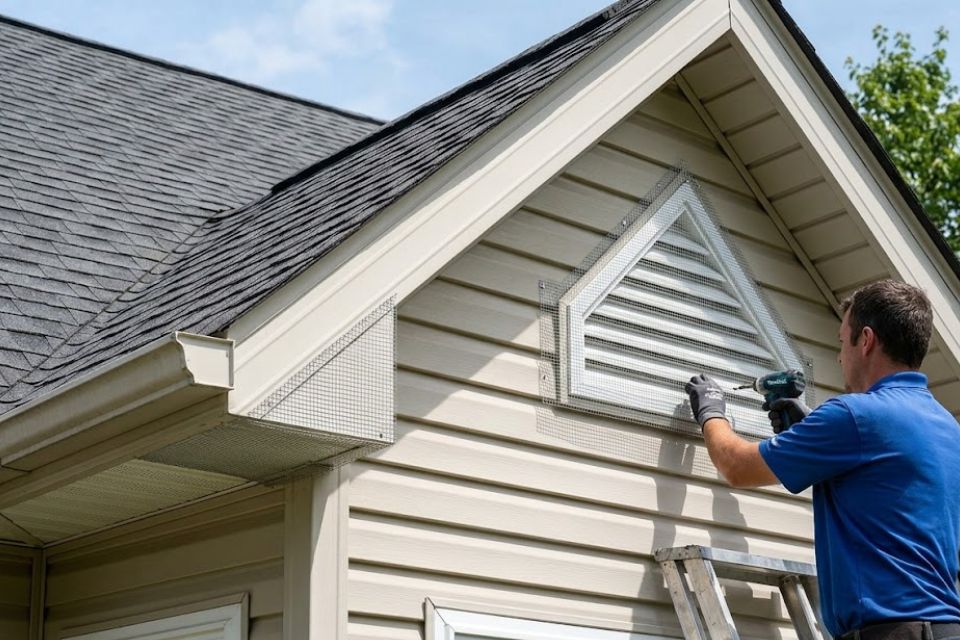
Gable vent exclusion mesh installation for attic rodent proofing in Winston-Salem
NC-licensed structural pest control. Written guarantee on exclusion work. Same-day dispatch before mid-afternoon. Recorded records for Forsyth County Health Dept.
๐Ÿ”ง Tech Insight

Attic proofing fails on roofline shape more than material choice. Simple gable roofs with one ridge cap and four soffit runs need 6 to 10 sealing points. Pre-1940 homes with dormers, hips, and many roof penetrations need 20 to 35. Standard quarter-inch hardware cloth handles mice. Roof rats need half-inch with overlapped seams. Ridge caps need ridge-vent-compatible mesh inserts.

๐Ÿ“‹ Real Case

A Reynolda Park (27106) 1930s home with three dormers and a complex slate roof had recurring roof rat activity. We mapped 28 closeable points (vs the 8 a previous provider had addressed), sealed with color-matched aluminum mesh behind the existing soffit louvers, and the property has stayed clear for 18 months. Scope: $2,400.

Attic Entry Points, What Gets Sealed

Attic Entry Points, What Gets Sealed

Roof rats enter attics almost exclusively from above. The inspection systematically checks every overhead entry category.

Most Common

Soffit Voids

Open soffit voids, where the soffit board has deteriorated, was never installed, or has pulled away from the fascia, are the primary roof rat entry point in Winston-Salem's 1920sโ€“1960s housing. A gap of 1/2 inch anywhere along the soffit-to-fascia line is enough for roof rat entry. Closed with painted aluminum flashing or, on historic properties, painted wood closure matched to original material.

Frequent

Gable Vents

Gable-end vents installed without rodent-proof screening, or with deteriorated screening, are the second most common roof rat entry in West Winston homes. Most original gable vents in 1920sโ€“1950s construction have louver gaps of 1 inch or more, well above the 1/2-inch threshold. Retrofitted with 1/2-inch hardware-cloth inserts behind current louvers, or replaced with pre-screened vents where the original frames are deteriorated.

Common

Dormer Transitions

The junction between a dormer wall and the main roof is a construction void on older homes, usually a 1โ€“3 inch gap behind the dormer cheek wall where the roofing meets the dormer framing. On many Buena Vista and Forest Hills properties with multiple dormers, there are 4โ€“8 such transition points, each needing individual review and closure.

Secondary

Roofline Penetrations

Plumbing stacks, HVAC rooftop gear bases, and chimney-to-roofline junctions give secondary attic entry points. Most are sealed with lead or rubber pipe collars that deteriorate over time. Inspection checks each for current condition. Replacements use galvanized metal flashing plus stainless-steel mesh where gaps exceed 1/2 inch.

Tree Access Is Part of the Scope

Tree Access Is Part of the Scope

Attic proofing without addressing tree access will be partially good at best. A roof rat colony will find new entry points if overhanging limbs keep to give rooftop access. We check tree proximity as part of every attic inspection and include trimming suggestions in the written scope.

The Rule

6-Foot Clearance Minimum

Any tree limb overhanging within 6 feet of a roofline surface gives viable roof rat access. The 6-foot clearance standard accounts for a rat's jump distance from limb to roof. Properties in Reynolda Park and Buena Vista commonly have 10โ€“20 limbs that violate this threshold, trimming planning with a licensed arborist is part of the long-term exclusion plan, not an optional add-on.

Sequencing

Trim Before or Simultaneously With Sealing

Roofline sealing before tree trimming is partially good, it forces rats to find other entry points that may not have been sealed. The ideal sequence is. Inspection. Tree-access review. Trimming recommendation issued. Sealing done simultaneously with or right away after trimming. We don't refuse to seal without trimming, but we record the remaining risk clearly in the written scope.

We Don't Trim

Arborist Planning

Tree trimming is not a service we give directly. For Reynolda-belt properties where real trimming is needed, we can recommend licensed Forsyth County arborists we have arranged with on past projects. Timing is usually agreed so trimming and sealing happen within the same week.

Free Inspection, Winston-Salem & Forsyth County

Written quote. No contracts. Open 24/7.

๐Ÿ“ž Call (844) 635-0403
Work Detail

How Attic Rodent Proofing Really Works

Attic rodent proofing addresses the three primary entry pathways rodents use to reach attic spaces in Winston-Salem homes. Gable-end vents. Soffit corners. Roofline penetrations. Each gets a different treatment way matched to its physics.

Gable-end vent proofing

The triangular louvered vents at roof ends are designed for attic ventilation but the slats don't meet rodent-exclusion spacing, roof rats and squirrels enter freely. Treatment: 1/4-inch galvanized hardware cloth cut to fit the gable opening and installed behind the current louvers (not over them, that destroys the architectural appearance). Edges secured with stainless steel screws into the framing. Keeps the ventilation specification while excluding rodents. Typical work time: 30-60 minutes per gable end.

Soffit corner sealing

Where roof overhangs meet exterior walls, the construction joint often leaves 1/2-inch to 1-inch gaps invisible from ground level. Roof rats access these directly from overhanging tree limbs. Treatment. Find each gap with attic-side and exterior-side inspection. Fill with closed-cell expanding foam as backing. Finish with paintable polyurethane sealant matched to current trim color. The work is detailed because each soffit run can have 8-20 individual gap locations.

Roofline penetration sealing

Plumbing vent stacks, electrical service entrances, antenna masts, and HVAC chases all penetrate the roof deck and have flashing that degrades over decades. Treatment. Check each penetration's flashing condition. Replace failed flashing with right material (rubber boot for vent stacks. Lead flashing for electrical service. Etc.), seal any annular gap with right weather-rated sealant. Arrange with roofing contractor if structural repair is needed.

Attic-side trap setup during exclusion

Snap traps placed in attic runway positions during the exclusion phase catch any rodents still inside while exterior work goes. Trap monitoring keeps for 7-14 days post-exclusion to check population knockdown.

Typical scope and pricing

Single-story home with simple roofline: $480-$950. Two-story home with multiple gable ends and tricky roofline: $850-$1,800. Planning with arborist for tree clearance: separate scope, $350-$1,800 arborist invoice. Free inspection makes the itemized quote.

Factors That Change Your Specific Quote

About insurance: Proofing is a preventive measure, not a covered repair under homeowner insurance. The work itself isn't reimbursable, but the resulting damage prevention is the financial argument.

Want your real number? Call (844) 635-0403 for a free roofline assessment.

Common Questions

FAQs

What is attic rodent proofing and how does it differ from general exclusion?

Attic rodent proofing is roofline-specific exclusion, it targets the soffit, gable-vent, dormer-transition, and penetration entry points that roof rats use. General rodent exclusion covers the full property from foundation grade to roofline. Attic proofing is right when the inspection confirms roof rat activity with no ground-level species present. If Norway rats or mice are also confirmed, the scope expands to include foundation-grade and interior penetration sealing.

How do I know if I need attic proofing vs. crawl-space sealing?

Location of evidence is the primary indicator. Scratching from overhead, ceiling voids, attic, combined with pointed 1/2-inch droppings in the attic insulation points to roof rats and attic proofing. Scratching from underfoot, crawl-space sounds, basement activity, combined with blunt 3/4-inch droppings at the foundation points to Norway rats and crawl-space sealing. Mixed evidence means both scopes are needed. The inspection confirms which applies.

What does attic rodent proofing cost in Winston-Salem?

Roofline exclusion on a typical West Winston single-family home runs $700โ€“$2,000 based on roofline trouble, many gable vents and dormers, and linear footage of soffit to seal. More tricky rooflines on larger Buena Vista and Forest Hills homes trend toward the upper end. Free inspection. Written quote before work begins.

Do you remove the rats from the attic before sealing?

Yes, always. Sealing an active roof rat population inside the attic creates a decomposition problem as trapped animals die. Standard sequence. Attic trapping to achieve knockdown. Confirmation of reduced activity. Then roofline sealing. On light infestations, trapping and sealing can be scoped simultaneously. On set up infestations, treatment runs first.

What's really being proofed in an attic?

Three categories. Gable vents (the louvered triangular vents at roof ends. Need hardware cloth installed behind the current louvers). Soffit corners (the joint where roof overhangs meet exterior wall. Usually have 1/2-inch gaps). And roofline penetrations (plumbing vent stacks. Electrical service entrances. Antenna masts. Each has a flashing seal that degrades). All three get treated in a complete attic proofing.

Does attic proofing need homeowner attic access?

Inspection yes, work mostly from exterior. We need attic access to find interior-side entry points and check insulation contamination. The sealing work happens mostly from the exterior, ladder work at the gable ends, soffit corners, and roofline. Interior cleanup is a separate visit if contamination warrants it.

Will attic proofing damage my roof or shingles?

No. Soffit and gable-vent work happens at the eave and gable-end framing, no contact with shingle field. Roofline penetration work uses methods compatible with current flashing. We don't drill, cut, or alter roofing material. Any work above the roof deck gets arranged with a roofing contractor if structural-level repair is needed.

Does attic proofing prevent squirrels too?

Same physical exclusion blocks squirrels as a side effect, but squirrels need different licensing scope than rodents. We find squirrel presence on inspection and refer to wildlife specialists for removal. Once squirrels are removed, attic proofing prevents re-entry of squirrels, rats, mice, and bats.

How long does attic proofing usually take?

1-2 days of work for most properties. Inspection and trap setup day one. Exclusion work day two. Larger homes or those with wide roofline trouble can run 3 days. Total program time (inspection through final check) usually 3-4 weeks.
Related Services

Often Combined

๐Ÿ“ž Call (844) 635-0403, Open Now